In the Hands of Masters:
Reframing the bicycle through craftsmanship and process
We began with the challenge of expanding Richard Sachs’ audience beyond the cycling community, while questioning how the bicycle has become commodified through marketing-driven collaborations. In response, we developed a project that repositions the bicycle as an art object through a collaboration between masters, Richard Sachs, who hand-builds the steel frames, and Gen Saratani, who applies traditional urushi lacquer. The project is focused on slowness and material. This shifts value from visibility to making, expanding perception to new audiences while staying true to Sachs’ philosophy.
We identified a gap between Sachs’ practice and audiences outside the cycling community, particularly those who value functional art. Interviews and research showed that existing collaborations are often driven by marketing narratives, overlooking craft and material. This revealed an opportunity to expand his audience through art and design contexts, while maintaining his philosophy of slowness and respect for the material.
THE MASTERS
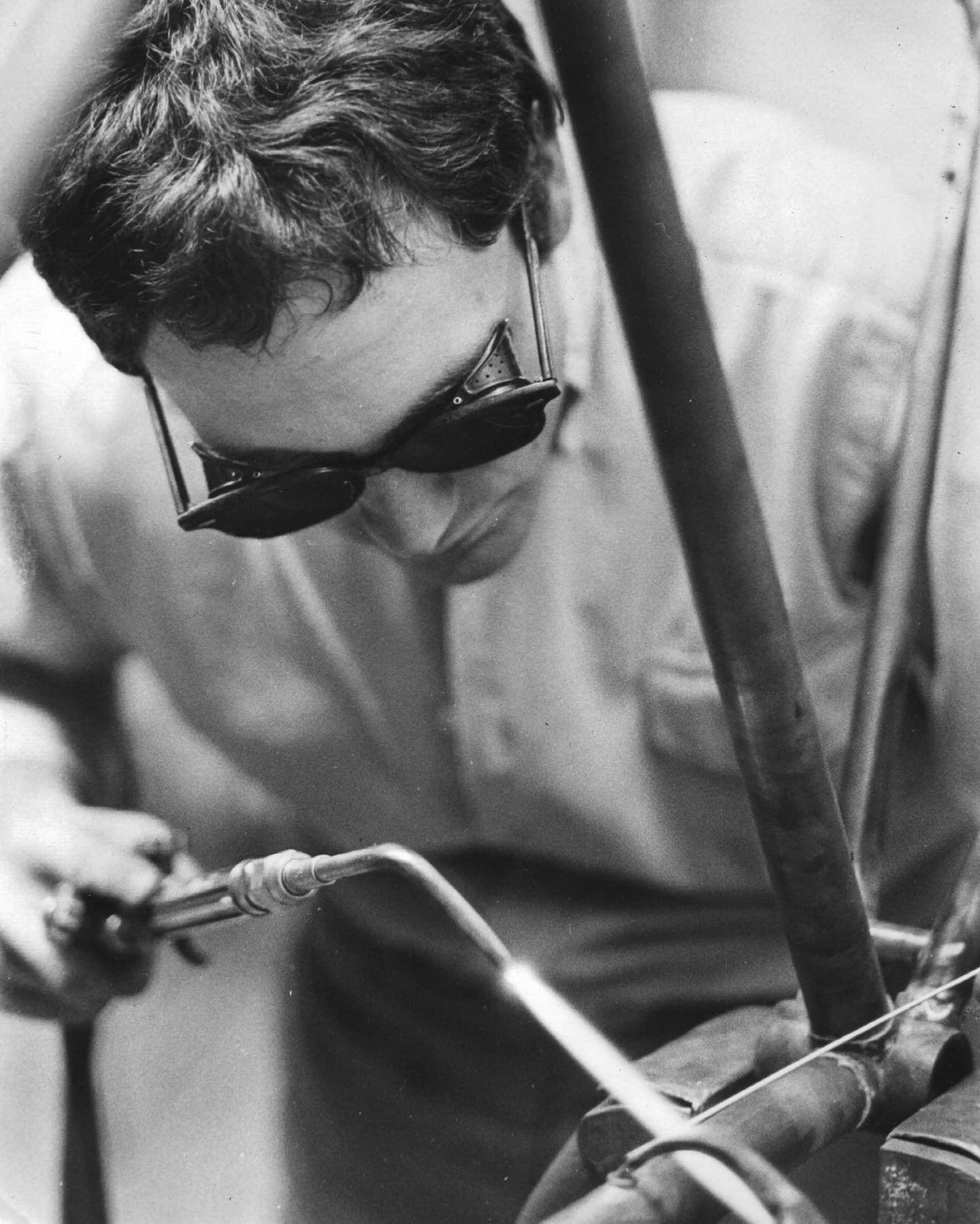
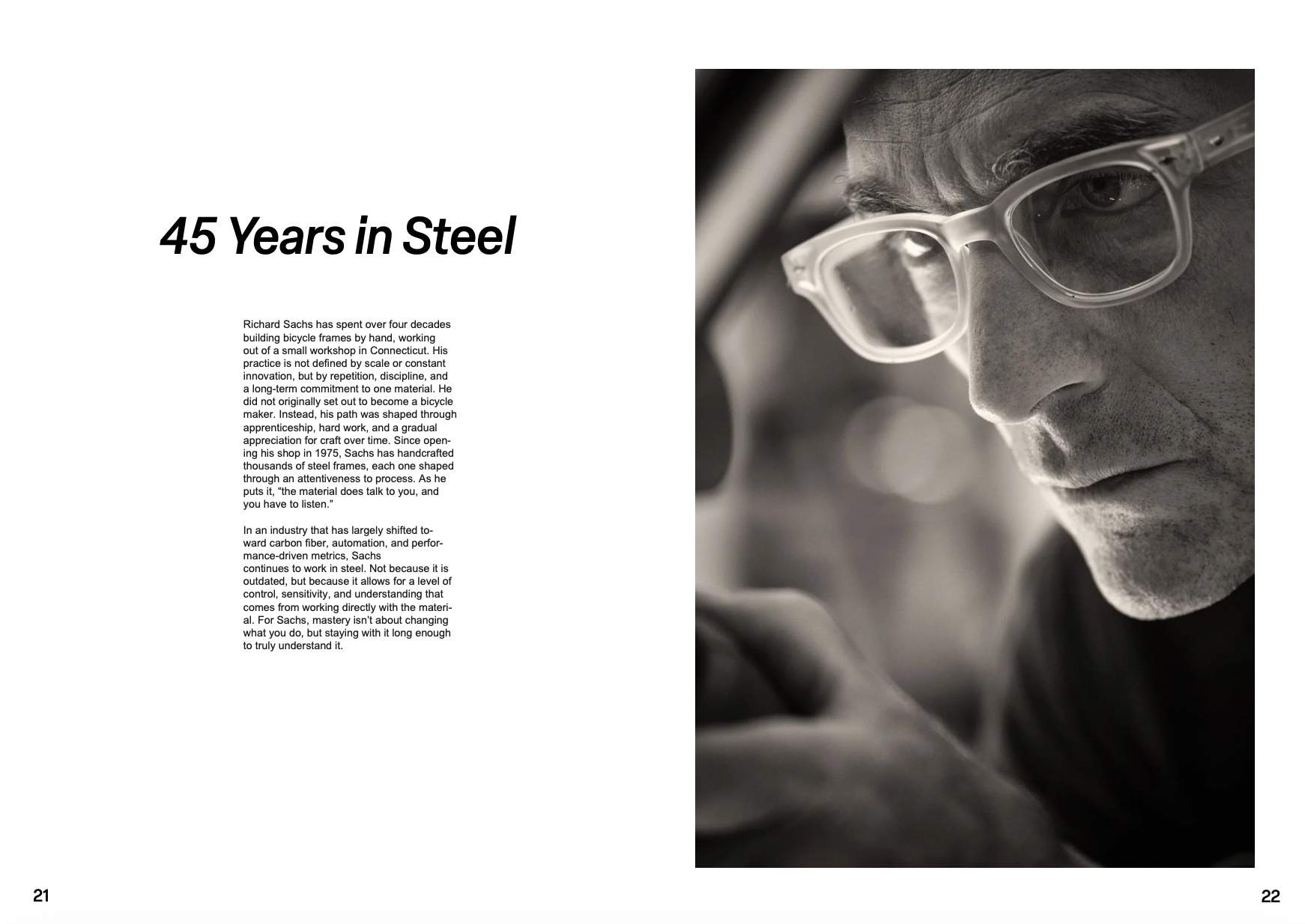
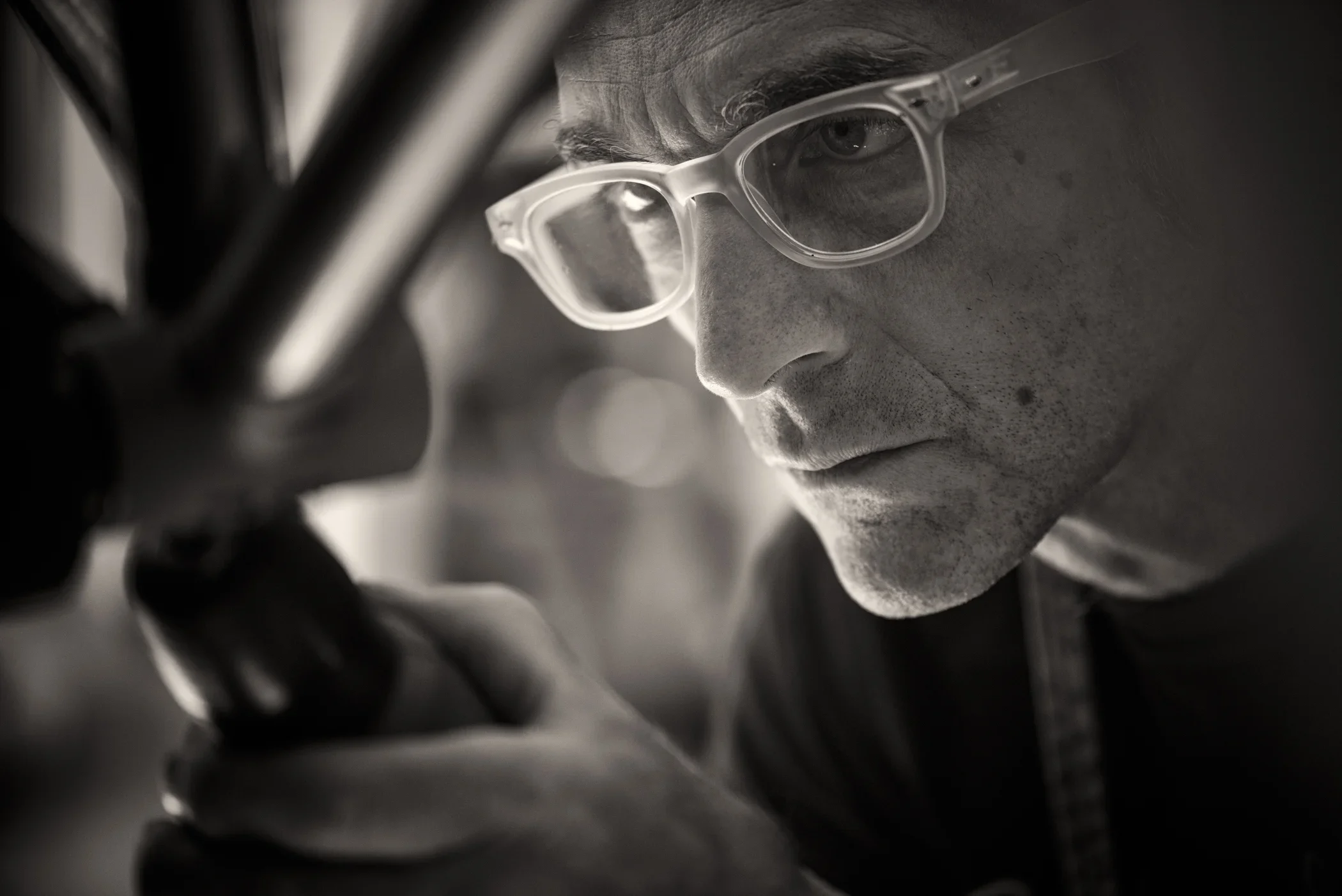
Bike Frame BuilderRichard Sachs
A master bicycle frame builder known for his one-man workshop and process-driven practice, where each steel frame is handcrafted with a focus on precision, slowness, and intention.
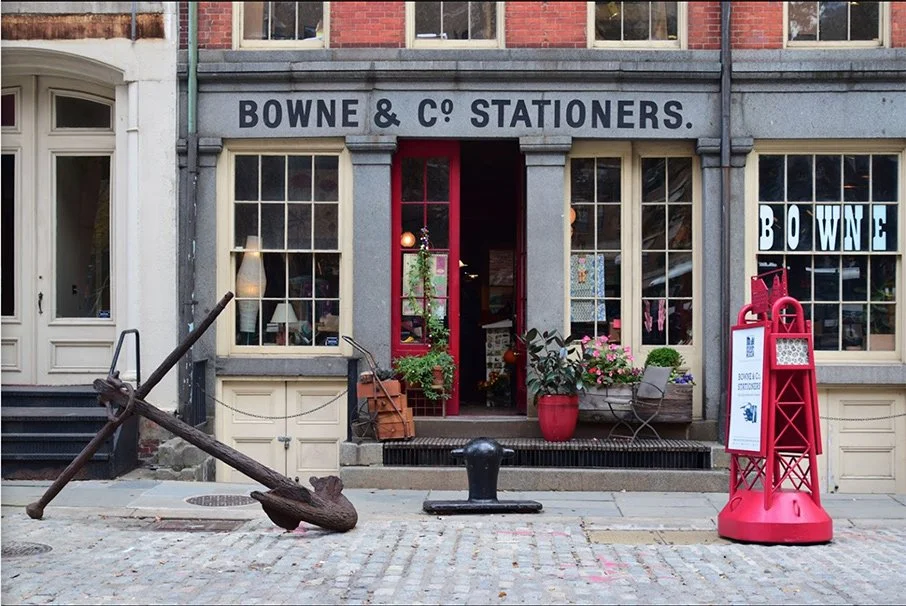
Bowne & Co.
Letterpress Printing CompanyBowne & Co. is one of New York’s oldest operating printing houses, specializing in traditional letterpress techniques that emphasize craftsmanship, precision, and the physicality of print.
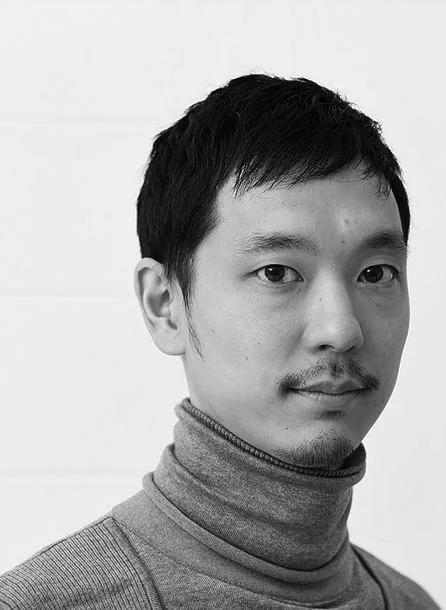
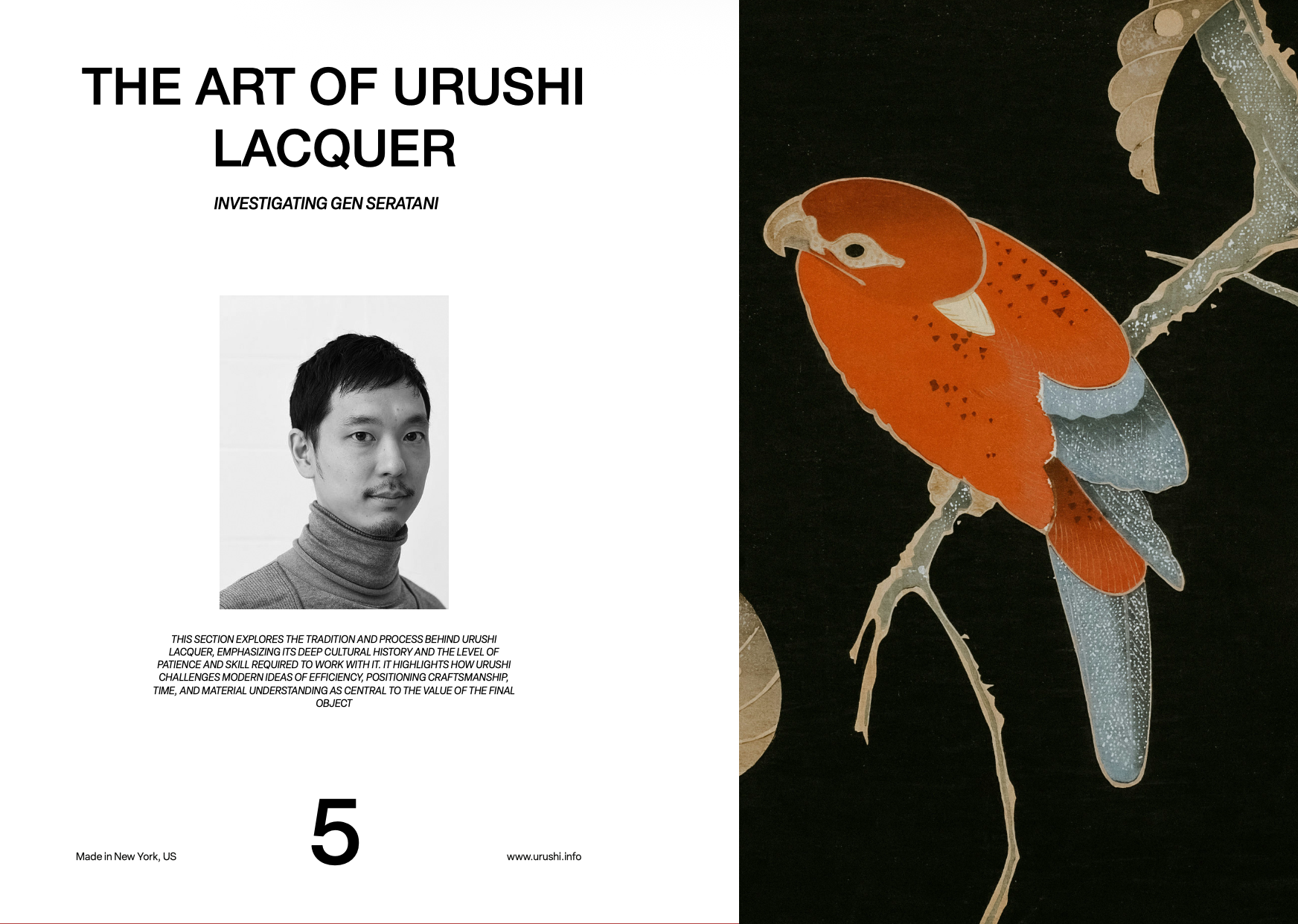
Urushi Lacquer ArtistGen Saratani
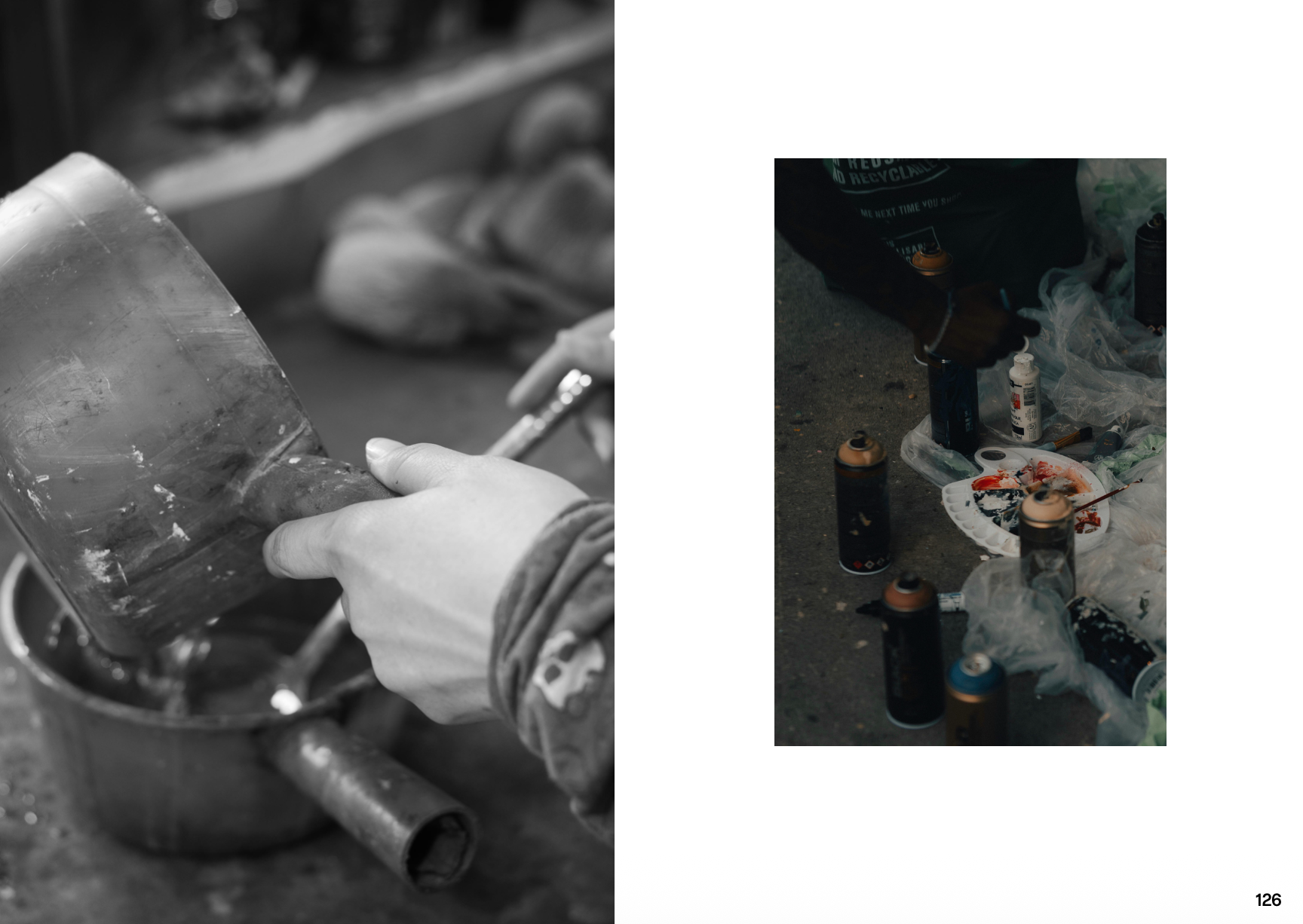
A New York–based urushi artist who practices traditional Japanese lacquer techniques, applying layers of natural tree sap to create surfaces defined by depth, precision, and time.
PROTOTYPING
Painting
Exploring surface application through hand-painted techniques to simulate the depth and flow of urushi lacquer.
Texture
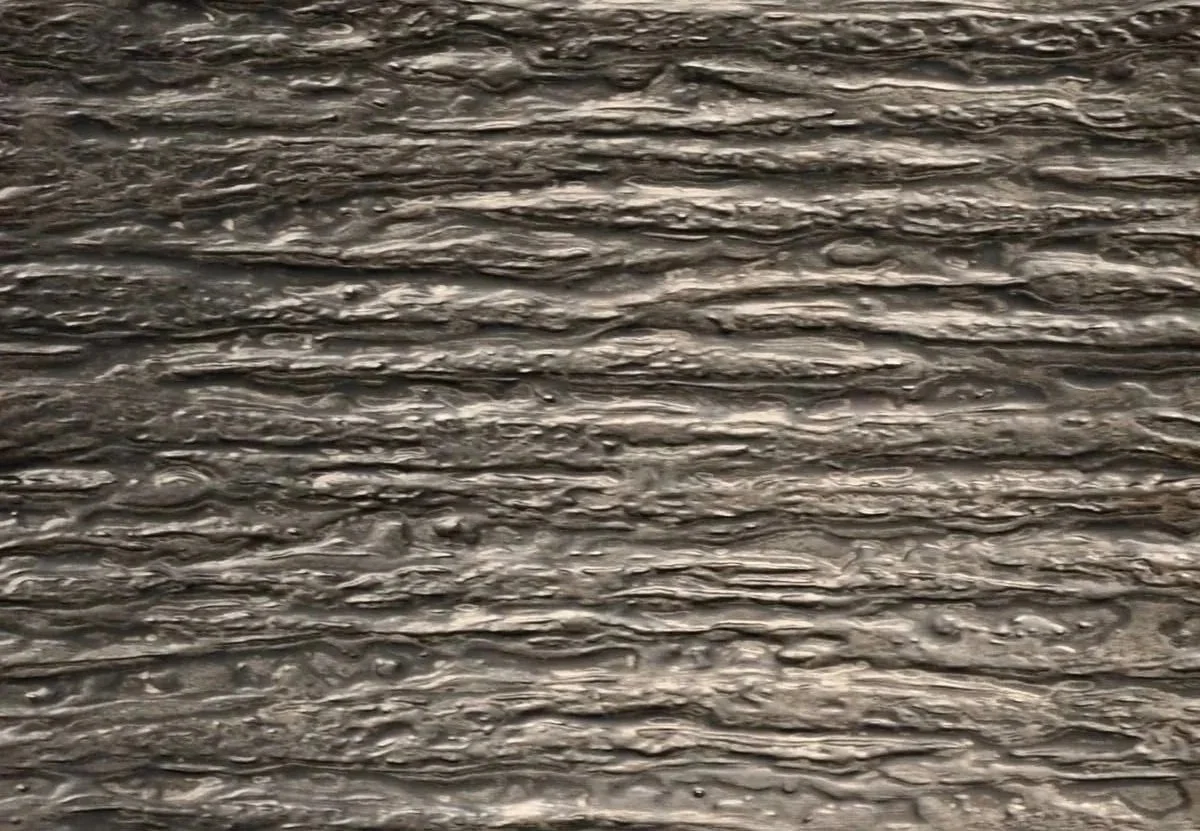
Testing crackle and organic patterns to mimic the natural imperfections and material character of urushi.
Layering
Building up multiple coats to understand how depth, translucency, and time affect the final surface.
Color
Experimenting with tonal palettes inspired by traditional urushi, deep reds, blacks, and gold accents, along with modern colors.
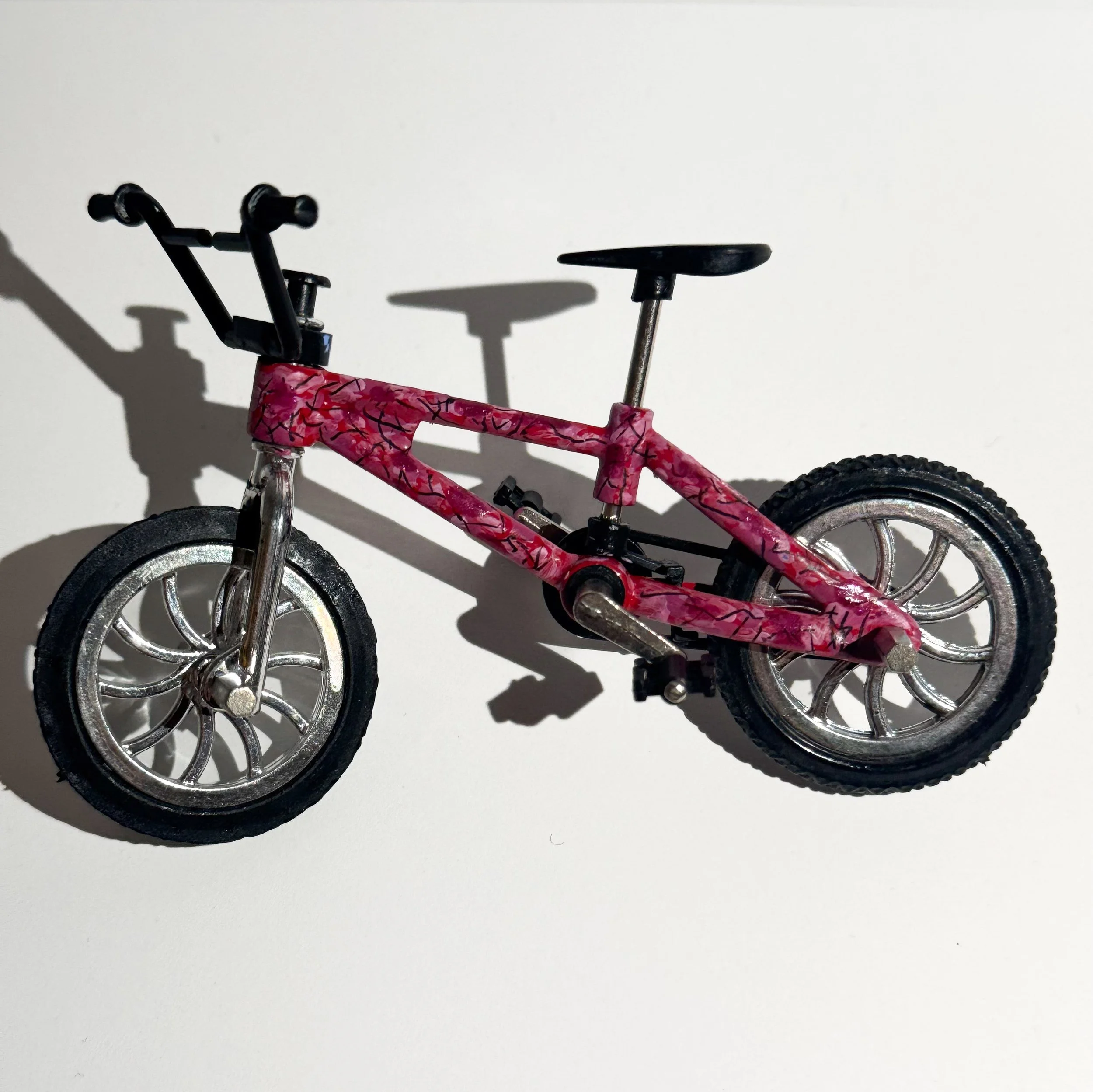
An early study testing surface texture and crackle patterns to mimic the visual language of urushi lacquer.
Initial Exploration
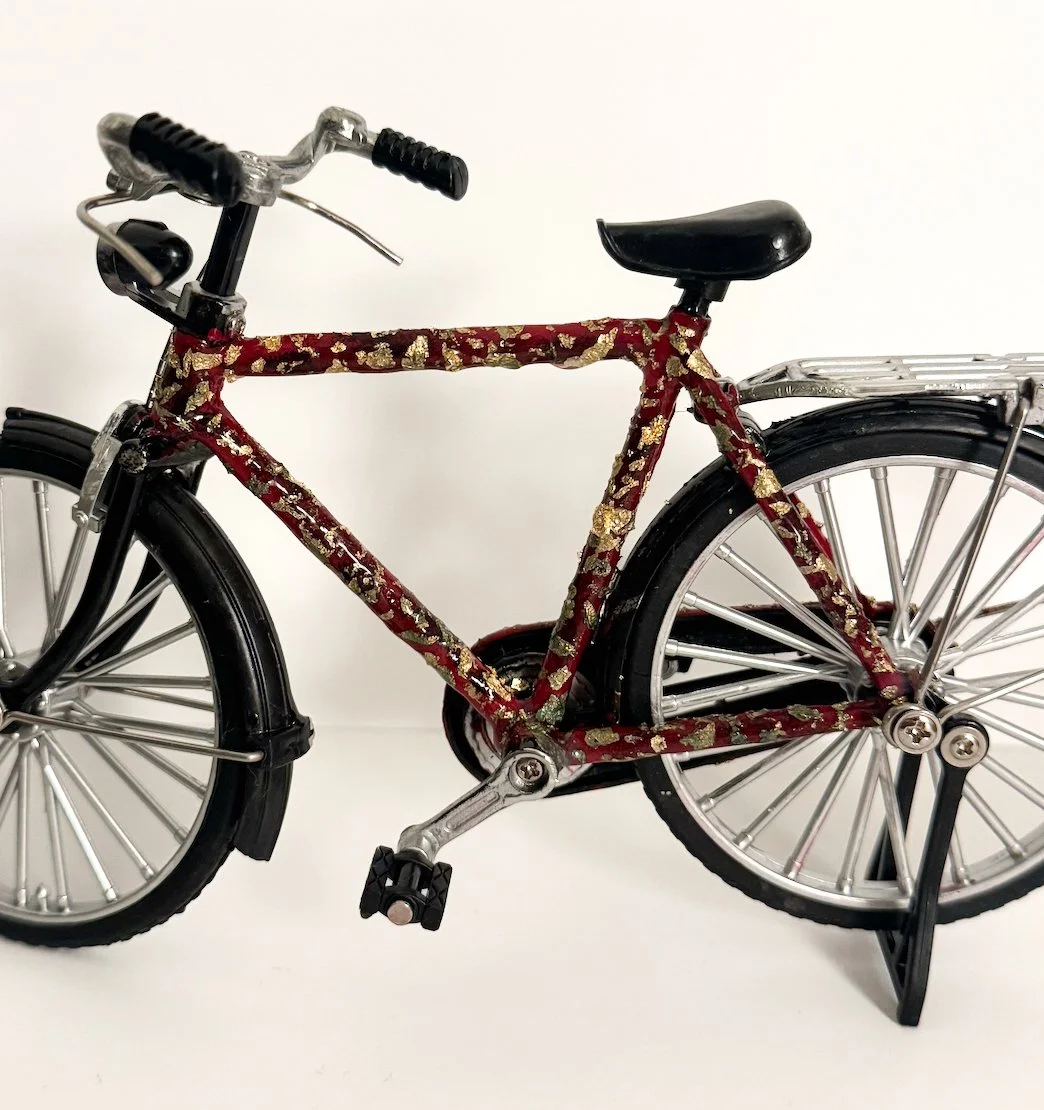
An exploration of gold leaf placement, emphasizing how highlights can trace and elevate the structure of the frame.
Gold Application Study
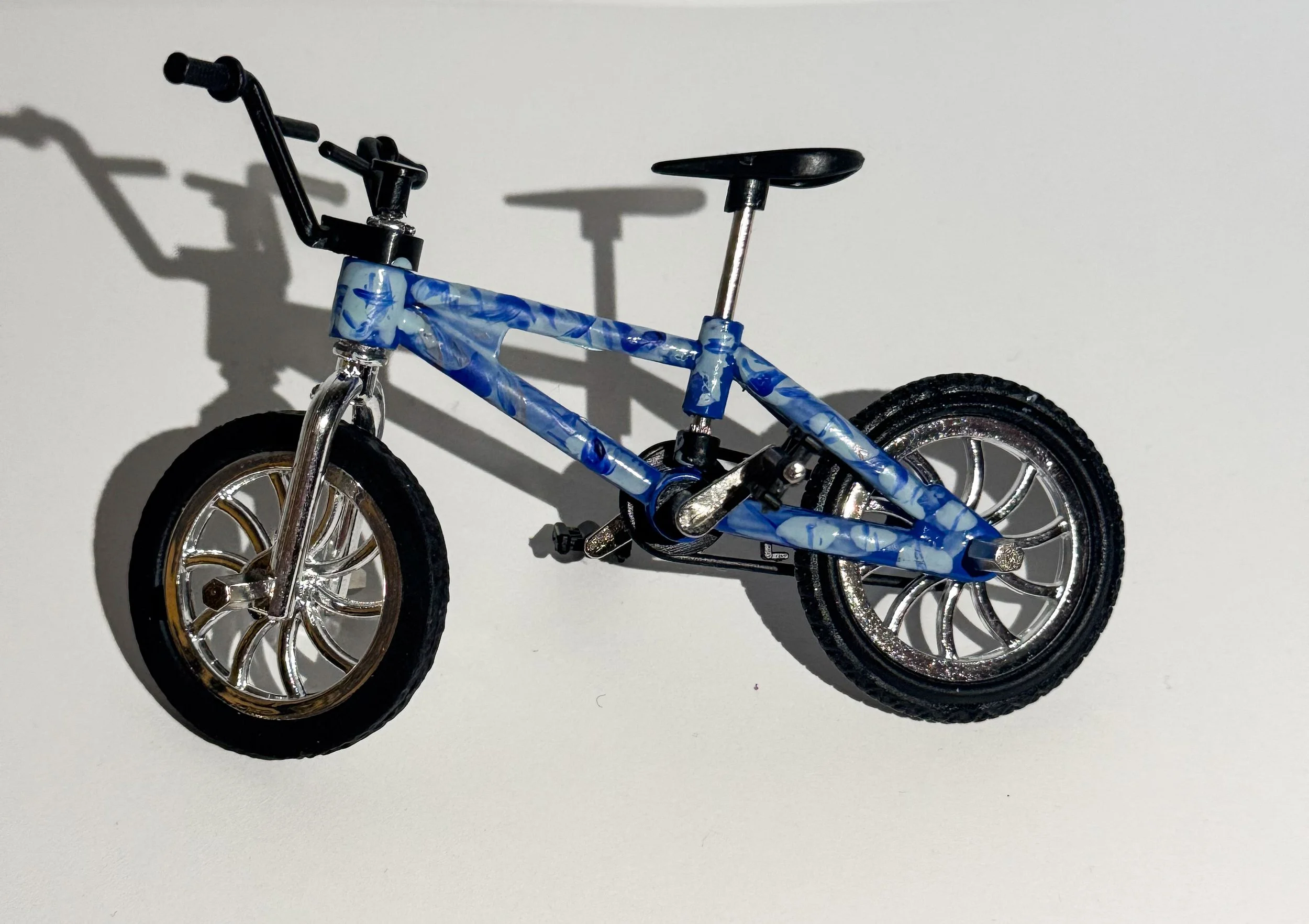
A test of alternative tonal palettes, examining how color shifts impact depth, contrast, and perception.
Color Variation
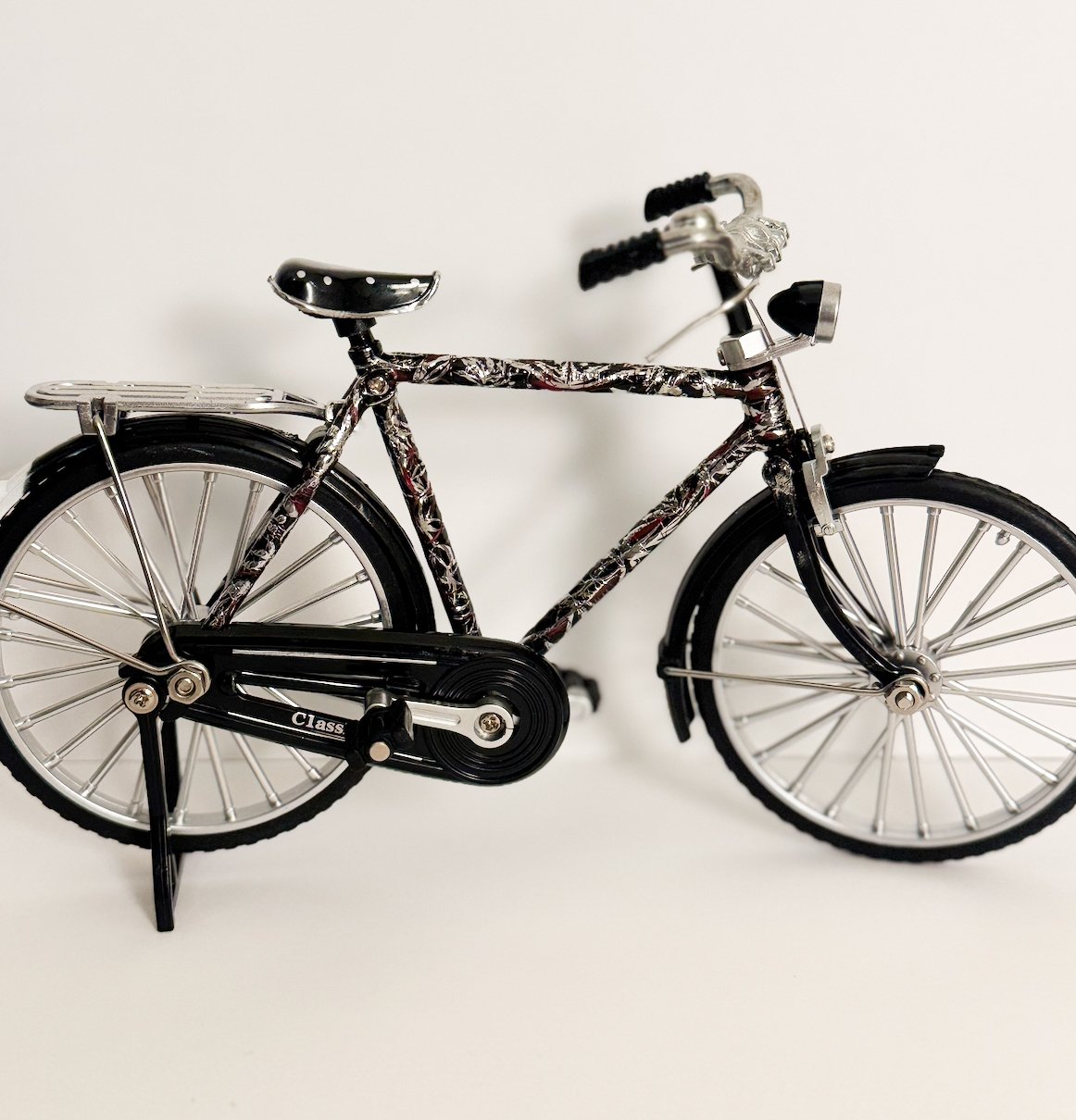
A more restrained iteration focusing on balance, allowing texture and material detail to emerge with subtlety.
Surface Refinement
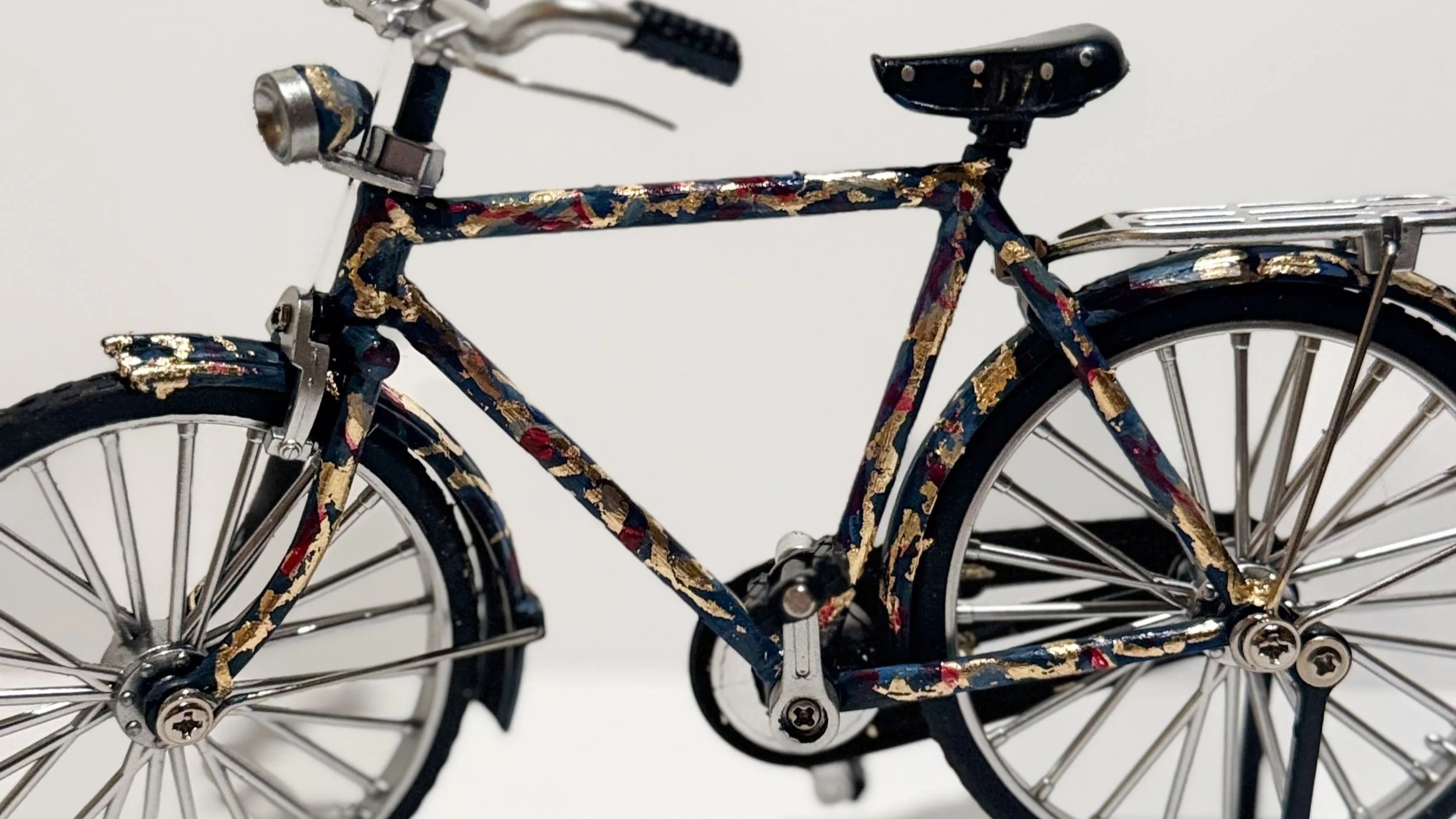
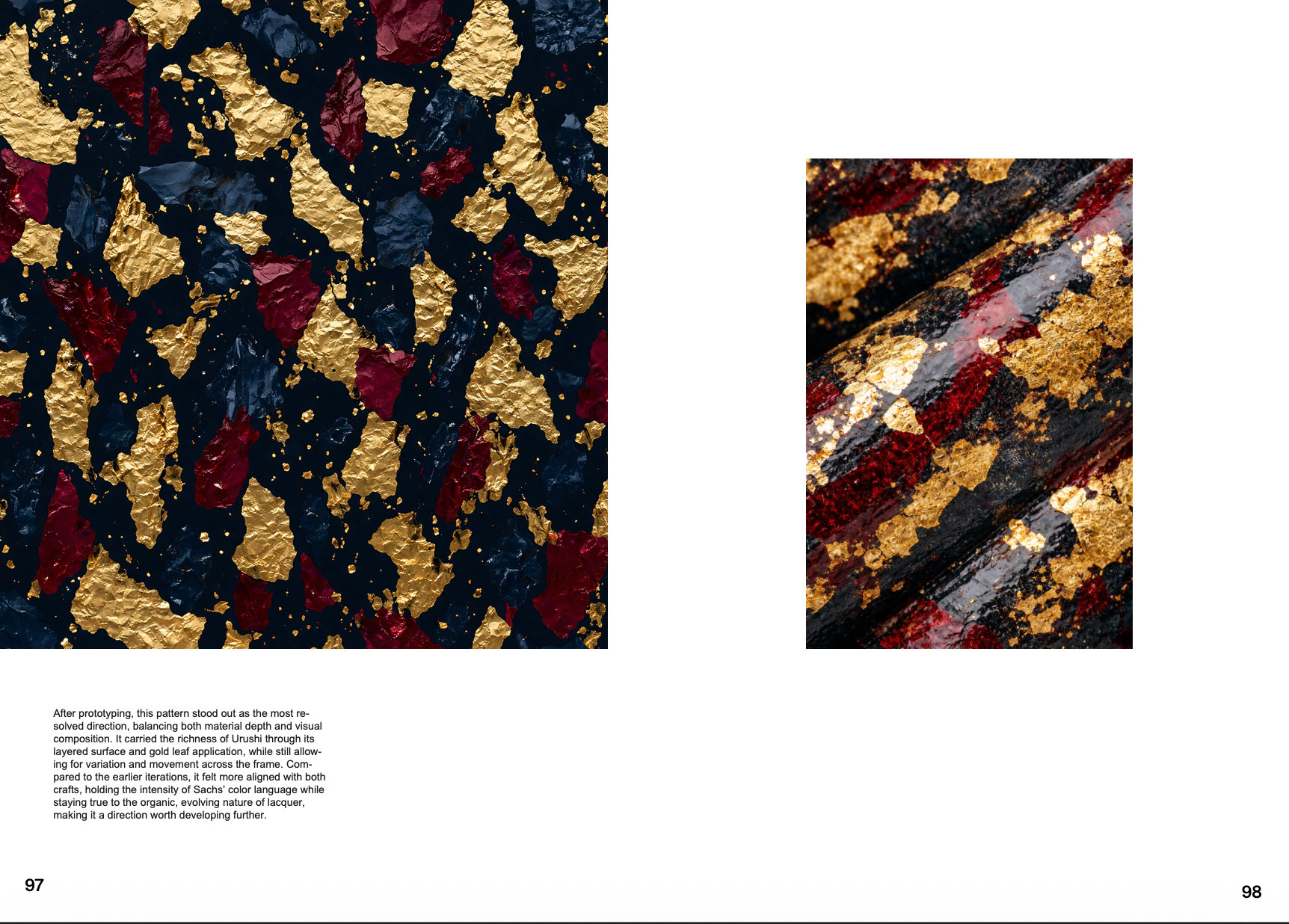
The resolved composition where layered color, texture, and gold detailing come together to unify steel structure with lacquer expression.
Final Direction
FINAL
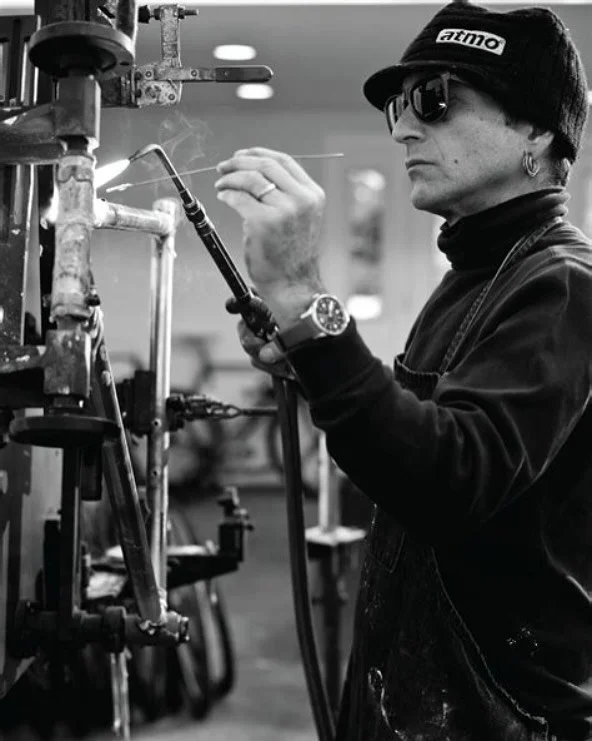
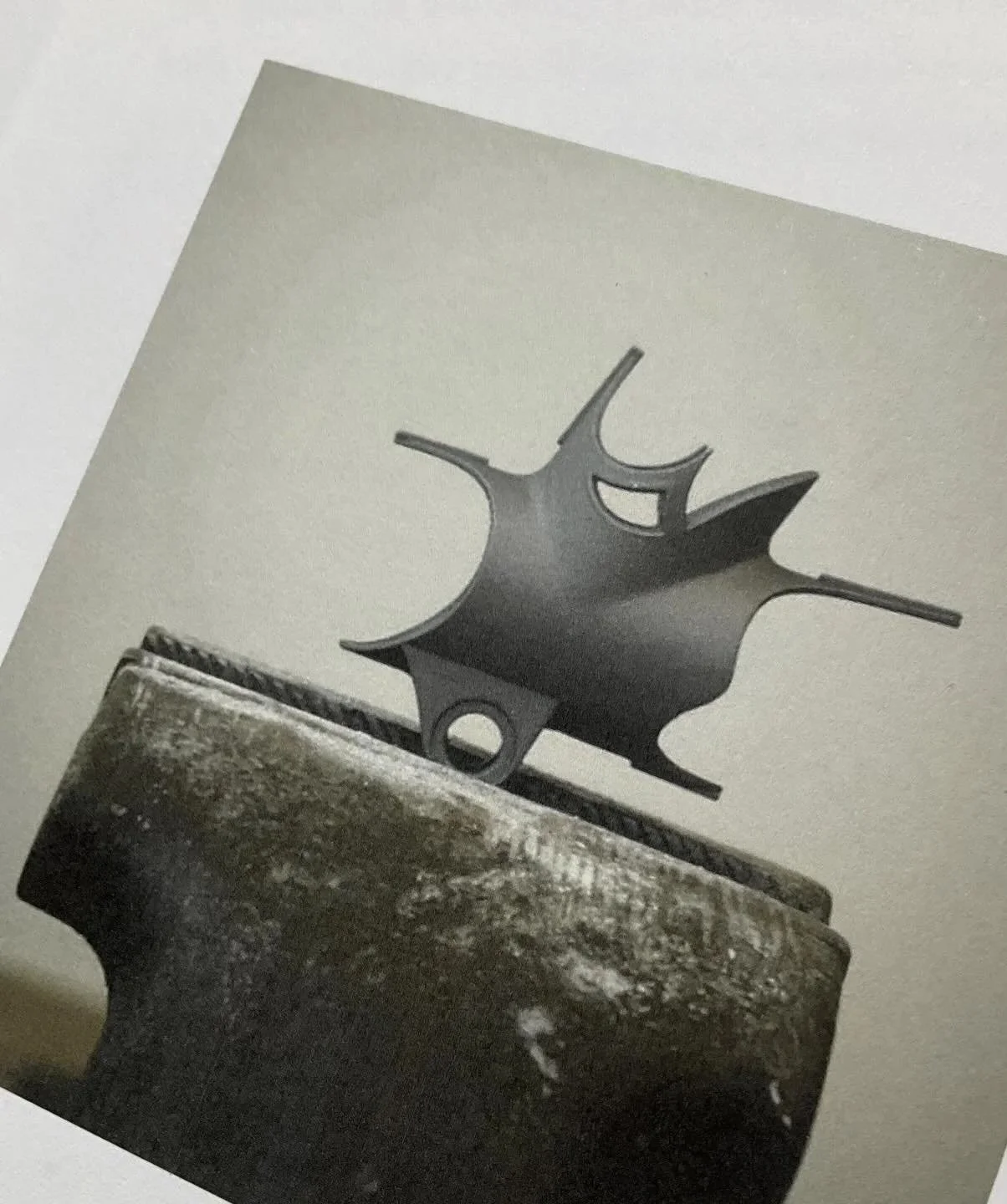
The project takes the form of a hypothetical collaboration, where Richard Sachs crafts a steel frame and Gen Saratani applies urushi lacquer to create an art object. Alongside this, we developed a book that documents the collaboration, produced through traditional letterpress techniques with Bowne & Co. By positioning the bicycle as an artwork and the publication as a crafted artifact, the project highlights the process of each master while also democratizing access to the collaboration, allowing broader audiences to engage with it beyond the single physical object.
Richard Sachs and Gen Saratani
Of Masters and Making, 2026
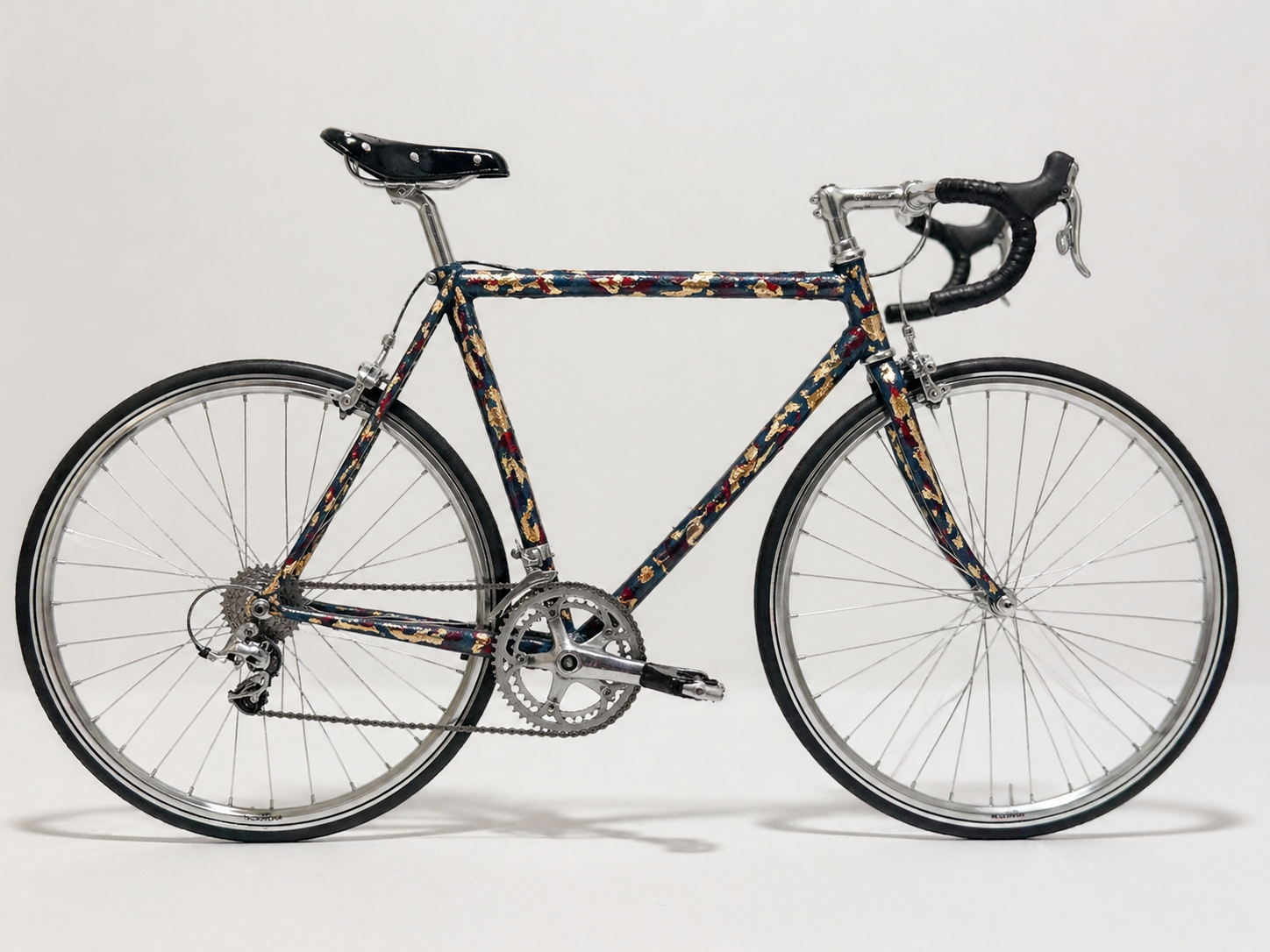
Steel, urushi lacquer, gold leaf
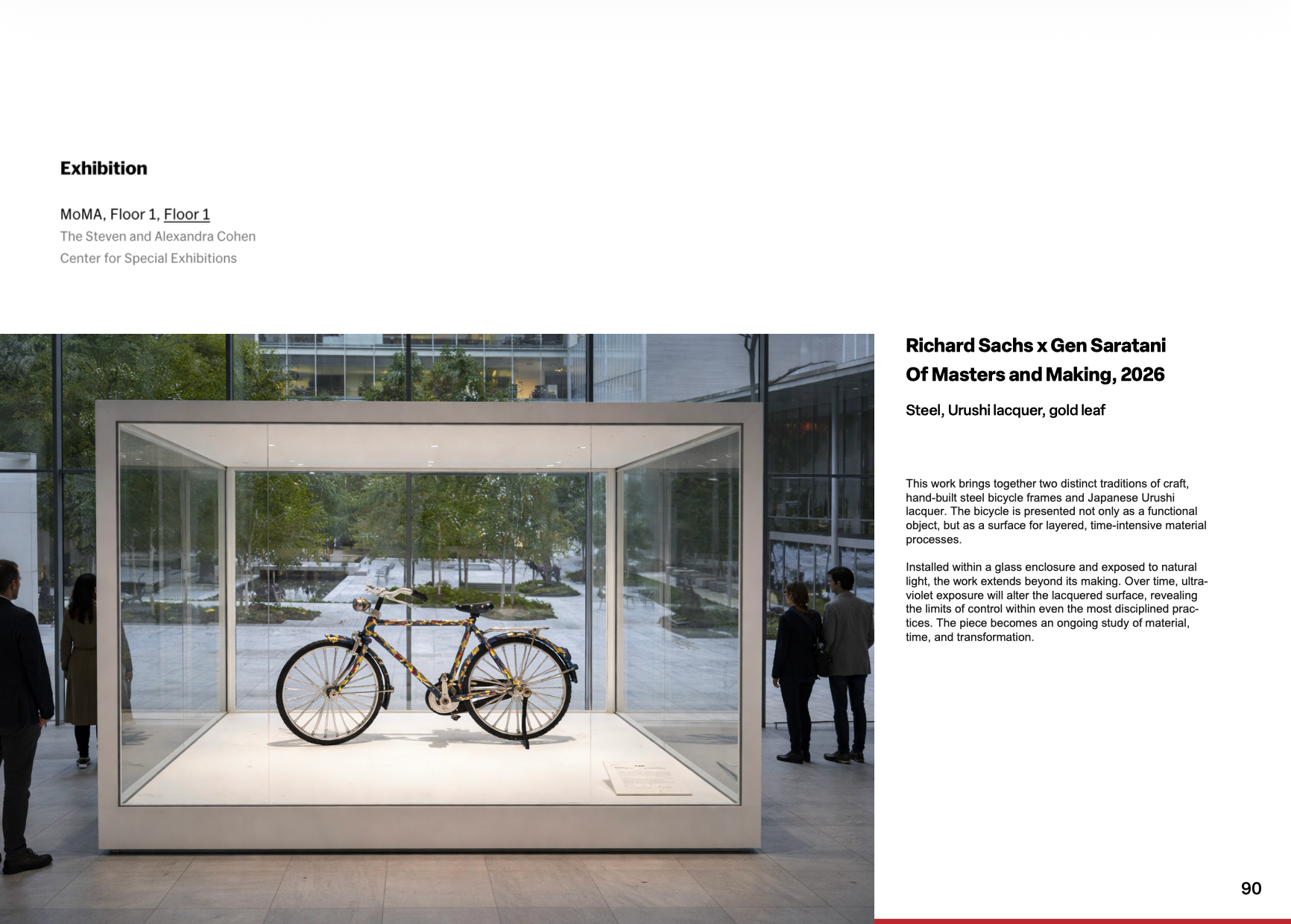
This work brings together two distinct traditions of craft: hand-built steel bicycle frames and Japanese urushi lacquer. The bicycle is presented not solely as a functional object, but as a site of process and making. Constructed by Richard Sachs and layered through Gen Saratani’s lacquer practice, each application of urushi is built slowly, cured, and refined.
Installed within a glass enclosure and exposed to natural light, the work continues to evolve. Ultraviolet exposure gradually alters the lacquered surface, revealing shifts in tone, texture, and depth. Rather than deterioration, this transformation becomes an extension of its story, positioning craft as an ongoing condition where the object remains constant, and its surface records duration, attention, and change.
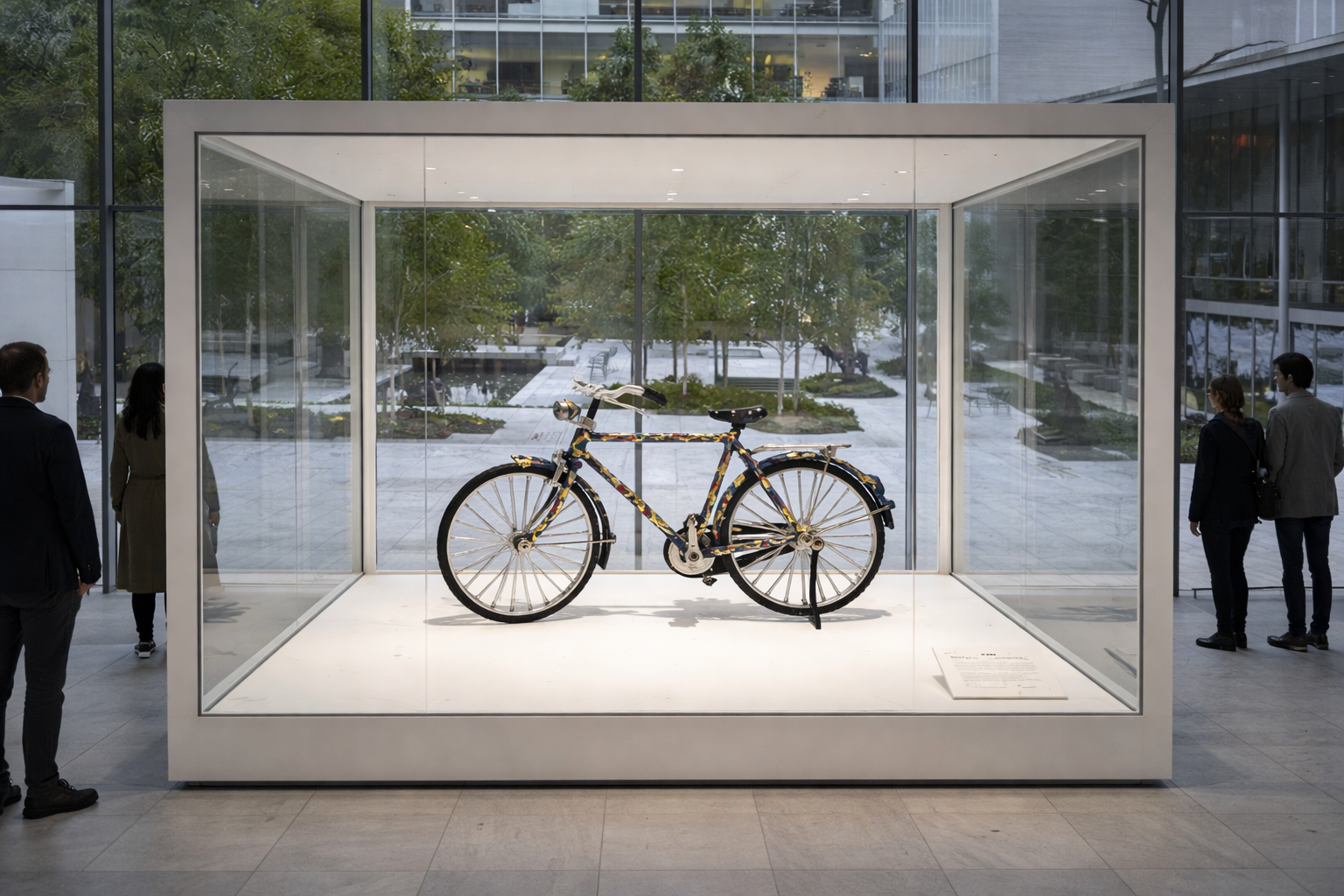
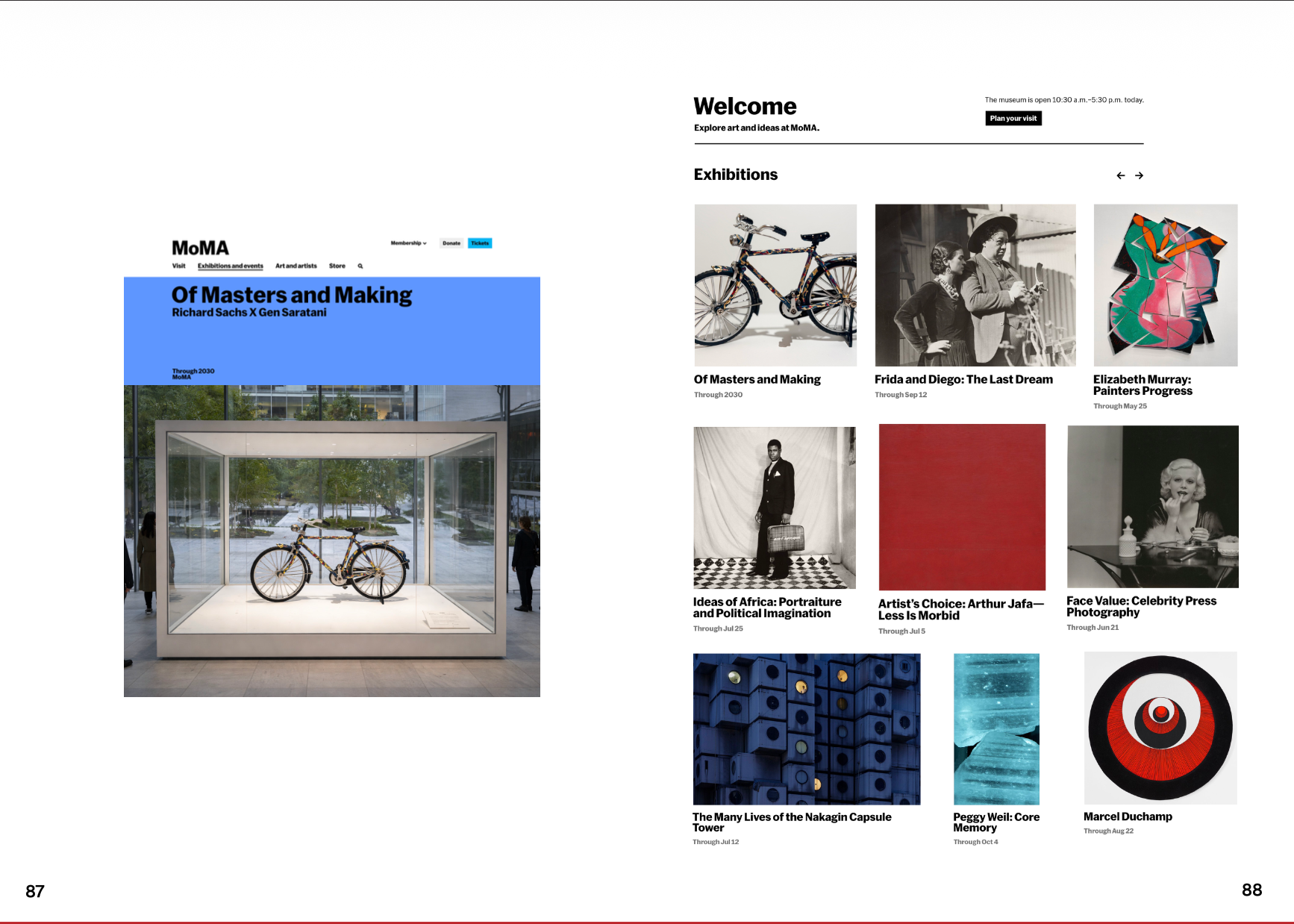
The bicycle is placed within the Museum of Modern Art to shift how it is understood, from a functional object to something viewed through craft and intention. MoMA creates a setting where the work can be read beyond performance, allowing audiences to engage with how it is made and what it represents.
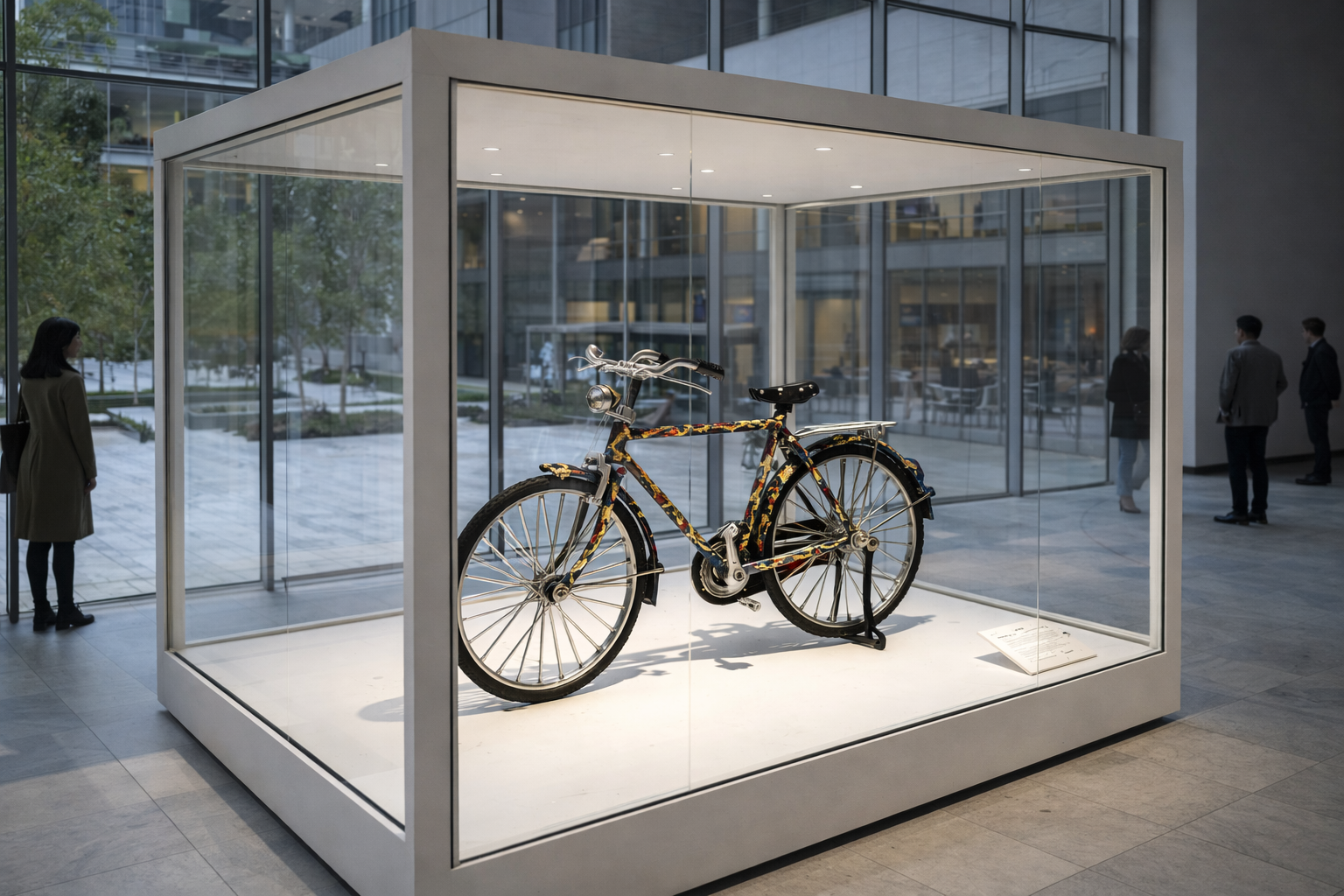
The piece is displayed in a glass enclosure positioned near large windows, allowing direct exposure to natural light. This condition is intentional. Urushi lacquer is sensitive to ultraviolet light, and instead of protecting the surface, the exhibition allows it to change over time. As the bike remains on view, the lacquer gradually shifts, subtle changes in tone and texture begin to appear.
Rather than treating this as damage, the transformation becomes part of the work. The bicycle continues to evolve, extending the process beyond its initial making. Each moment reflects a different stage, allowing viewers to experience the object in a way that is not fixed.
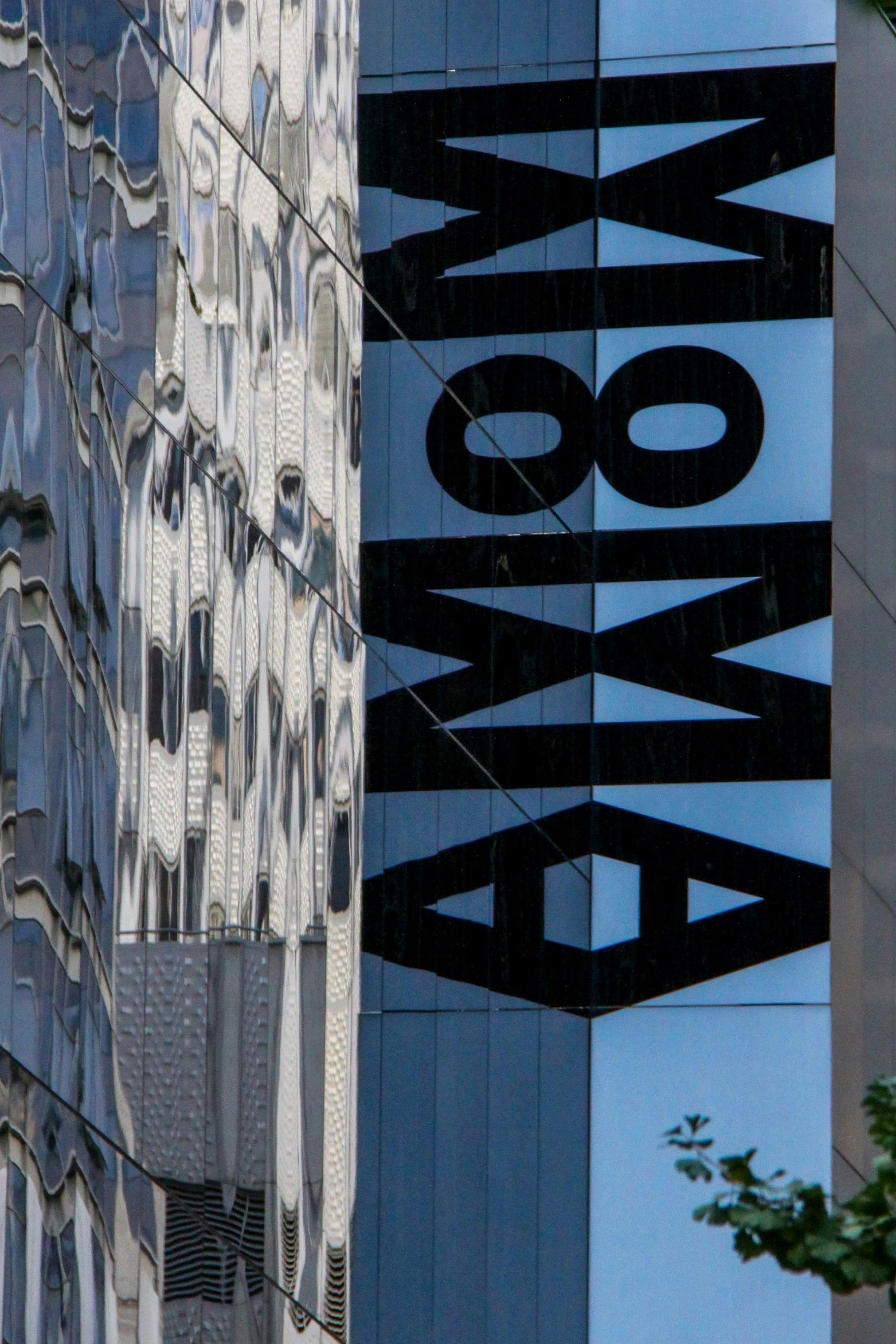
By placing the work in MoMA, the project reaches audiences outside of cycling, opening it up to those interested in art and design. It creates a new context where the bicycle can be understood not just for what it does, but for how it is made and how it changes over time.
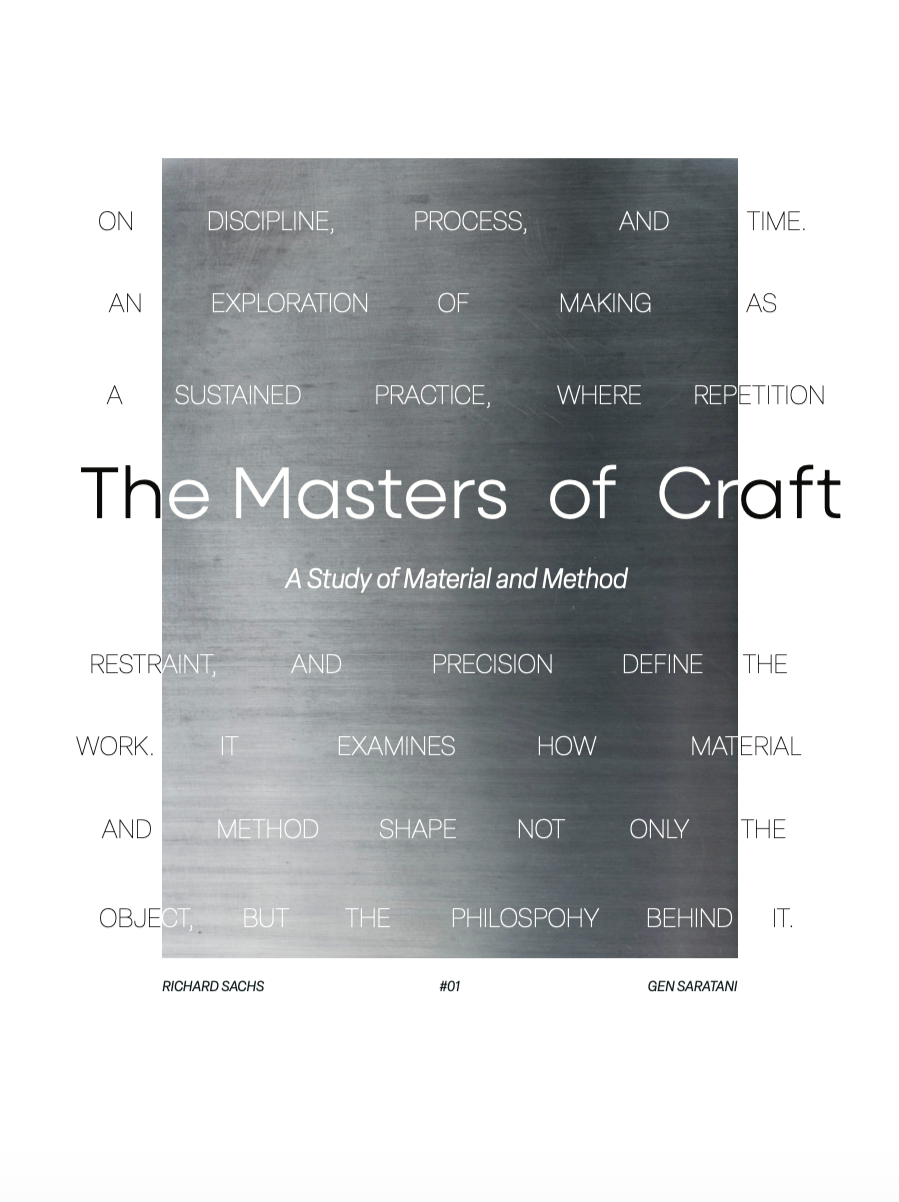
The Book
The book documents the collaboration through a crafted, letterpress-printed format, extending the work beyond the physical bike and allowing broader audiences to engage with its process and making. It is designed as a split format, allowing readers to enter from either side and follow each artist’s practice before the two narratives meet at the center.